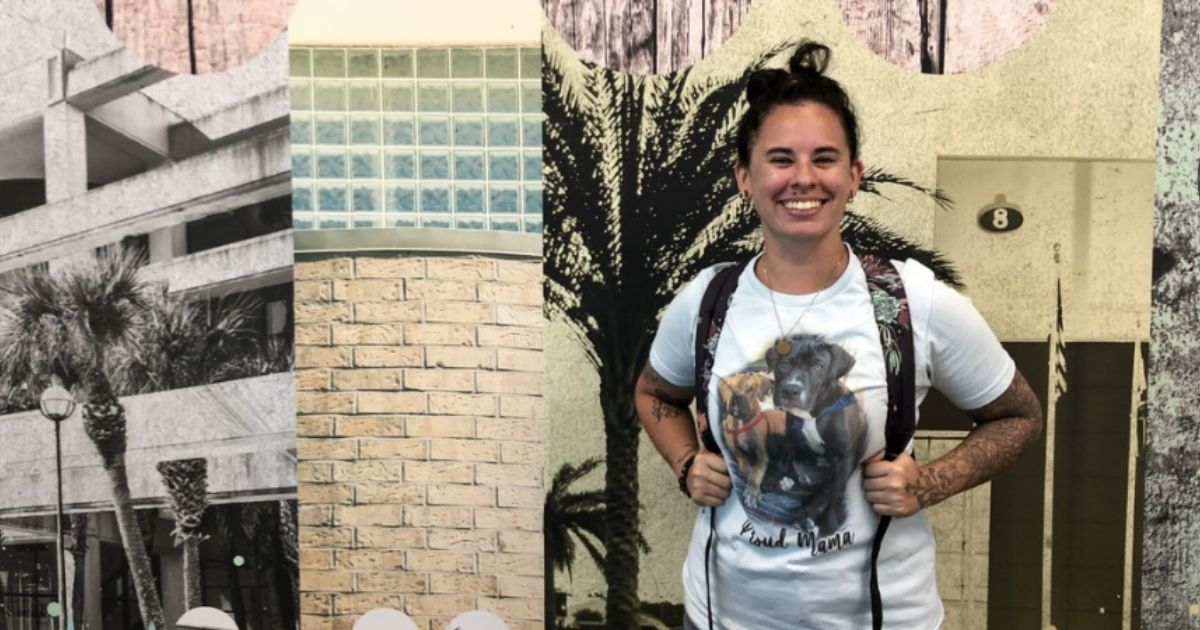

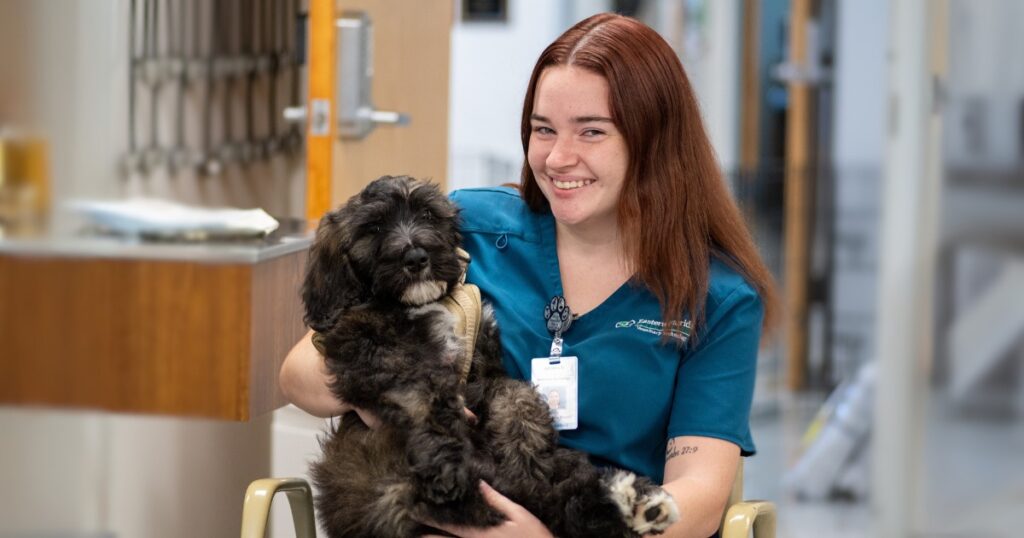
When Hali Toreihi chose Eastern Florida State College’s Veterinary Technology Associate in Science (A.S.) program, she never imagined how it would change her. Now in her second year, she’s furthering her clinical pathological skills while serving as the president of the Vet Tech Club.
“It turned out to be one of the best decisions of my life,” said Toreihi. “I’ve never felt so supported by instructors who are truly invested in my success.”
The Veterinary Technology program blends compassion, science, and hands-on learning to prepare students for high-demand careers in animal healthcare. Located on the EFSC Cocoa Campus, this AVMA-accredited program equips future veterinary technicians with the clinical and technical skills to support veterinarians in settings ranging from small animal practices to wildlife hospitals.
“Our Veterinary Technology program is vital to our entire community,” said College President Dr. Jim Richey. “By preparing the next generation of veterinary technicians and assistants, EFSC is strengthening the bond between people and animals while supporting an essential workforce for our region. This program ensures that students graduate with the hands-on skills, compassion, and professionalism needed to meet that responsibility.”
Program Overview: Hands-On from Day One
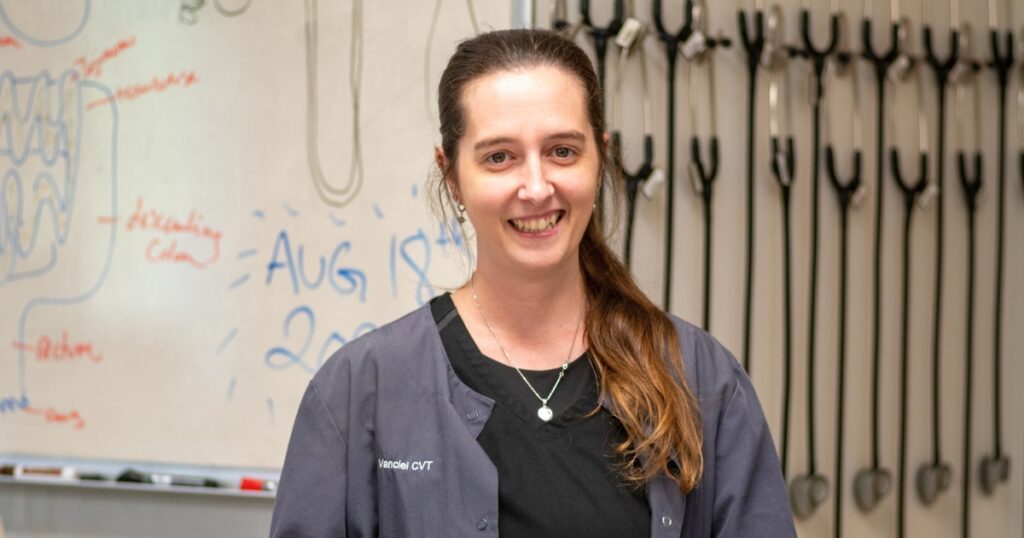
Maryann Vanciel, EFSC’s Veterinary Technology Program Manager, knows the program inside and out. As a 2003 graduate herself, she returned to teach exotic animal medicine and became full-time faculty.
“I absolutely love it,” she said. “We work from square one. You don’t have to have any prior experience.”
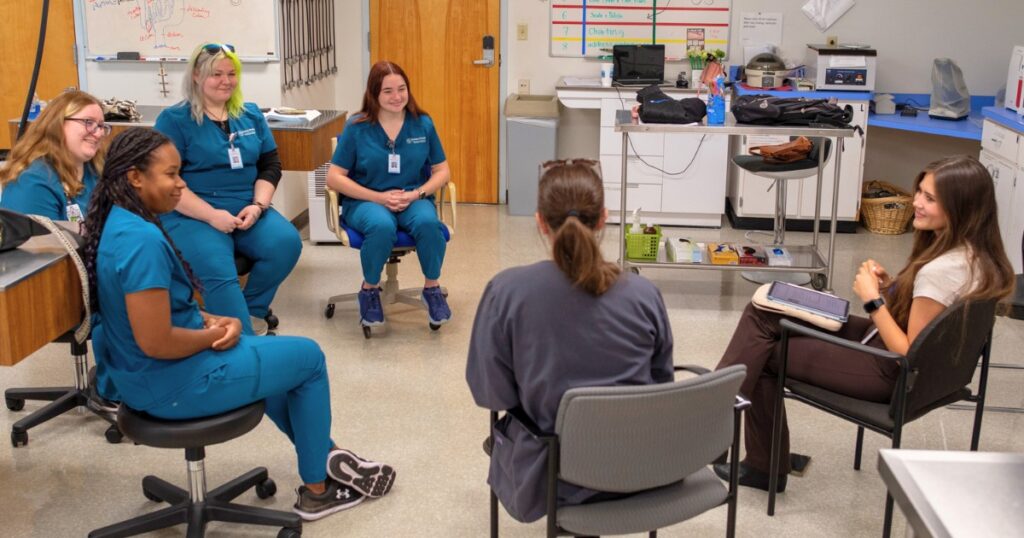
The two-year, full-time A.S. program limits cohort sizes to 24, fostering tight-knit, collaborative learning. Students move through a rigorous curriculum that includes clinical pathology, animal pharmacology, radiology, and surgical nursing. They gain practical skills through four semester-long work experiences in general, specialty, and emergency clinics, building both confidence and professional networks.
What sets the program apart, according to Vanciel, is the hands-on training and the heart behind it.
“We slowly build to more advanced procedures like surgeries and dental cleanings. Students practice on models first, then move to live animals under supervision.”
Student Voices: Community and Growth
Kristen Hamilton, a student in the program, had previous experience working in clinics, “But this program made me realize I wanted to become certified. The hands-on experience and tight community really made the difference. Getting confidence is huge. If you mess up, this is the place to do it and learn.”
Jenae Powell, who came to EFSC after earning a pre-med degree at FAMU, appreciates the program’s depth.
“Here, I finally learned the ‘why’ behind everything. That knowledge makes you feel more prepared and confident in the field.”
Adriana Howell, a practicing technician assistant, echoed that sentiment.
“Even with experience, this program helped everything click. The hands-on labs and supportive environment really brought it all together.”
Real-World Readiness
This program not only develops skills but also prepares students for professional success. Students work with a wide range of species, from dogs and cats to birds, reptiles, goats, and horses. They rotate through clinical experiences in diverse veterinary settings, allowing them to explore interests from general practice to exotic medicine.
Some, like Powell, are eager for exotics. Others, like Hamilton, love the precision of dental procedures. Toreihi, who has developed a passion for microscopy, looks forward to furthering her clinical pathology skills. “Every time a microscope slide appears at work, I ask to look at it. I can’t get enough.”
Students often cite the program’s emotional support as much as its academic rigor.
“Even if you feel overwhelmed, you’re never alone here,” said Hamilton. “Instructors and classmates are always ready to lift you up.”
Howell added, “It doesn’t matter how long it takes you to finish; what matters is that you keep going. I’m still here. I’m still trying.”
For Vanciel, that perseverance is what it’s all about: “If you love animals, just do it. We’re here to help you succeed.”
A Supportive Start to a Lifelong Passion
Graduates are eligible to sit for the Veterinary Technician National Examination (VTNE) and work in roles including veterinary technician, surgical nurse, and lab technician. Many pursue careers in small animal practices, shelters, research labs, and wildlife rehabilitation centers.
Whether students arrive with years of clinical experience or zero background, Eastern Florida State College’s Veterinary Technology program meets them where they are. With expert faculty, live animal labs, and a built-in support system, it transforms a love for animals into a career.
As Toreihi puts it: “The time’s going to pass anyway. Why not do something you love?”

- From Classrooms to Kennels: Training Tomorrow’s Vet Techs at EFSC - September 10, 2025
- 5 Exercises, 5 Minutes: A College Student’s Guide to the Pilates Series of Five - July 30, 2025