

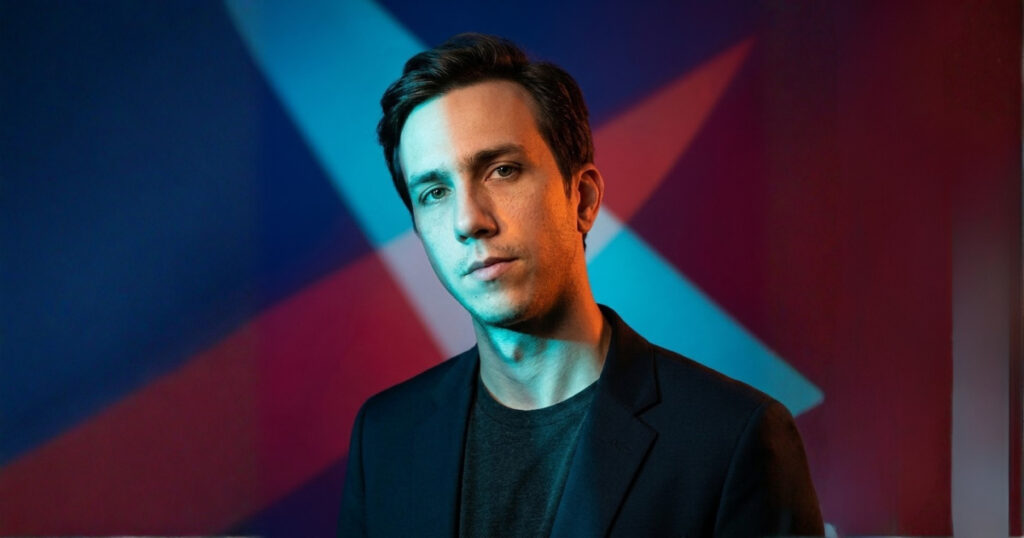
Evan Lindeman, a writing tutor at Eastern Florida State College’s Cocoa Campus, recently published his short story collection, Serene and Other Sorrows. Drawing on themes of family, loss, resilience, and hope, the anthology uses magical realism to explore what it means to be human. Lindeman spoke with EFSC about his writing journey, the inspiration behind his work, and advice for aspiring authors.
Tell me about your work at Eastern Florida State College.
I’m currently a writing tutor at the EFSC Library on the Cocoa Campus. I started as a part-time tutor at the Melbourne Campus and later moved to Cocoa to work full-time. I’ve been doing that for about three years.
At the Academic Success Center, we help with creative projects, research papers, essays, and pretty much any assignment that involves writing. If students need help, we’re willing and able to work with them.
You’ve said you’ve loved writing since you were young. What were some of your earliest influences?
Reading was especially important to me when I was young. It wasn’t until high school that I started getting more interested in writing, particularly poetry.
Growing up, I struggled with mental health issues. Writing became a very grounding and healing activity for me, and I got a lot of fulfillment from it.
One of my biggest influences was my English teacher during my junior year of high school, Mrs. DiPeppe. At the end of an essay I wrote for her class, she wrote the words, “You have a gift.” Those words were incredibly inspiring and motivating. They encouraged me to pursue writing as something more than a hobby.
I started with poetry, then moved into screenwriting, and later, in college, I discovered short stories. Short stories have remained one of my biggest passions, both to read and to write.
Were there other teachers or mentors who influenced you as a writer?
When I was working on my master’s degree, I wrote Serene, the title story of my collection. It was my first attempt at magical realism and fabulism. I was very nervous about sharing it in class because I had never written anything like it before and wasn’t sure how it would be received.
“The class response wasn’t especially positive, and I was left feeling pretty dejected as a result. I remember not being able to focus during the rest of class because I was too busy thinking that maybe I wasn’t cut out for writing and was just wasting my time.”
After class, my professor asked me to stay and talk. I assumed hehe was going to chew me out for checking out during class, but instead he told me Serene was one of the best stories he’d received from a student in years. We talked for over an hour, and it was one of the most uplifting and meaningful moments of my writing life.
Who are some of your writing influences?
China Miéville has been a major influence on me. John Steinbeck was very influential when I was growing up, and I love George R.R. Martin’s work as well. Those are probably my three biggest influences.
I have always loved poetry, and one of my favorite poets is Andrea Gibson.
What made you decide to pursue a master’s degree in creative writing?
When I graduated with my bachelor’s degree in pre-law, I still wasn’t completely sure what I wanted to do. However, I’d enjoyed parts of studying law, so I took the LSAT
I didn’t get a score I was particularly happy with though, so I started thinking more seriously about my passion for creative writing.
One of the schools I applied to for a master’s in creative writing was UCF. After I was accepted, the same professor who had encouraged me about Serene, David Poissant, sent me a letter explaining why he thought UCF would be a great fit for me. That convinced me to attend.
How did your anthology come together?
I’d already been writing extensively during my master’s program before I wrote Serene. Once I wrote that story, I fell in love with magical realism and fabulism. I was drawn to the genre’s ability to tell deep, emotional, symbolic stories.
Through the program, I learned a lot, especially the importance of brevity and how to make a point without being overly didactic.
The collection itself wasn’t completed during my master’s program. After graduation, I continued writing stories in the same genre because I enjoyed it so much. Eventually I realized I had enough stories to create a collection.
How would you describe magical realism for readers who may not be familiar with the genre?
Magical realism is characterized by a merging of the fantastical and the real. You have surreal or magical elements existing within an otherwise normal world.
In Serene, for example, a daughter is literally turning into a plant over time. That’s a fantastical element, but everything else about the setting is grounded in reality. That’s generally how magical realism works.
What makes magical realism unique as a storytelling genre?
It allows emotions and experiences to become literal.
For example, in Two Pieces, a man whose child is dying begins physically falling apart. His body parts literally fall off, and he has to put them back together. It’s an unusual premise, but it creates a powerful metaphor for trauma and grief.
Magical realism gives writers the freedom to explore strange but emotionally meaningful ideas without needing extensive fantasy world-building. You can focus directly on the emotional truth you’re trying to convey.
Why the title Serene and Other Sorrows?
I originally wanted to call it Serene and Other Sadnesses, but my mom convinced me to change it to Sorrows.
Many of the stories deal with sorrow, pain, and suffering in one form or another. Those experiences are part of life. The stories are really about reckoning with those feelings, learning how to cope with them, and finding ways to grow from them.
What themes tie the stories in your anthology together?
It wasn’t until after I finished the collection that someone pointed out the entire book is basically about family.
I think that’s true. The collection explores family, relationships, tragedy, triumph, and the connections we have with other people. Not just blood relatives, but partners, spouses, and loved ones.
Ultimately, it’s about what it means to be human. What it means to love, to laugh, to lose, and to grow. Magical realism allows me to explore those themes in ways I hope readers find interesting and beautiful.
Could you briefly walk through some of the stories in the collection?
Serene was inspired by an experience involving a plant my former partner owned. She knew trimming the dying stems would help the plant, but she struggled emotionally with doing it. That idea eventually evolved into a story about grief, growth, and transformation.
Two Pieces began with the image of a man literally falling apart under stress. Eventually, that became a story about a father coping with the serious illness of his child.
Thing Theory follows a man arriving at a hotel where people become objects when they feel they no longer want to live as themselves. The story was inspired by a nonfiction essay about people living in extremely difficult circumstances.
Bringing My Husband Back to Life came from the idea of a woman literally attempting to use necromancy to bring back her deceased husband.
“Growing Into Nothing All Over Again explores a Benjamin Button-like concept in which a son gradually grows younger and returns to his mother’s womb. It was based on my own adolescent fears of growing up and becoming independent, along with my mother’s own anxieties in this regard.”
Just Like Me, Just Like You centers on children literally inheriting the traumas of their parents.
“Poof imagines a world where people suddenly ‘poof’ into ash when they commit certain sins, even though nobody truly knows what qualifies as a sin. The idea originally came from my interest in the real-life, subjective ambiguity of what might constitute ‘sinning”
Shrinking Pains is one of the more straightforward stories. It’s about someone trapped in an abusive relationship who is physically tiny compared to their abuser.
Finally, “Here at the End” follows an older couple reflecting on their lives as they near death and wondering if this is truly the end or if time may be more complicated than they understand.
Do you have a favorite story in the collection?
My favorites are probably Serene, Two Pieces, and Thing Theory. I would also put Just Like Me, Just Like You near the top of that list.
What do you hope readers take away from your work?
I hope they’re entertained. I hope they’re challenged. And I hope the stories feel meaningful and perhaps even helpful in their own lives.
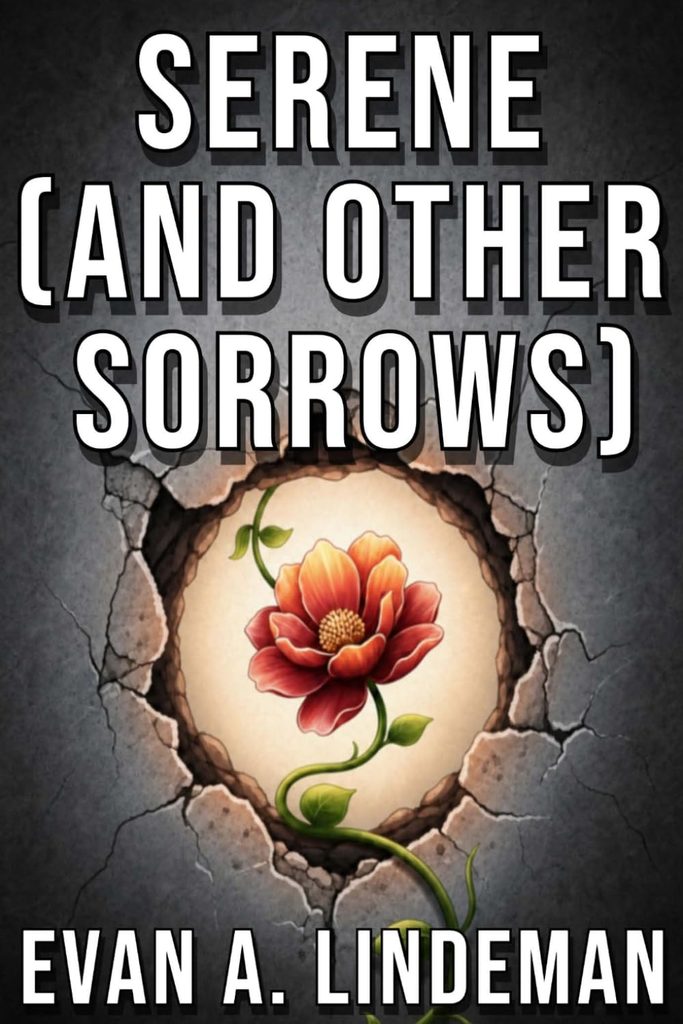
Tell us about the cover artwork.
The cover comes directly from the title story.
In Serene, the main character copes with the loss of her mother by gradually transforming into a plant. She grows so much that her vines spread throughout an apartment building and become part of it.
The flower emerging from the figure symbolizes hope. It ties into many of the ideas explored throughout the collection and reflects the symbolic nature of magical realism.
How has being an author influenced your work as a writing tutor?
Being a writer has definitely helped me as a tutor.
Writing can be frustrating. Creating a story, revising an anthology, or even working through a college paper can involve a lot of uncertainty and struggle. Having experienced those frustrations myself, I try to remember what that feels like when I’m helping students.
I think it helps me approach tutoring with greater empathy and understanding.
What advice would you give students who want to become writers?
Read and write.
You can spend a lot of time thinking about reading and thinking about writing, but the best way to improve is to do it over and over again.
Learn the craft. Listen to professionals. Different writers may offer different advice, so absorb what works for you and keep practicing.
Most importantly, read and write.

- EFSC Writing Tutor Publishes Magical Realism Anthology - November 4, 2026
- Turning Compassion into Careers: How EFSC’s Social and Human Services Program Changes Lives - October 28, 2026
- Former EFSC Athlete Makes Debut in Major League Baseball - September 28, 2026