
Living on Florida’s Space Coast, surrounded by ports, distribution hubs, and a growing aerospace corridor, Eastern Florida State College’s Dr. Deana Handfield Looney sees firsthand the pivotal role logistics plays in supporting both local and national economies.
“I’ve worked closely with industry partners, developed courses aligned with workforce needs, and watched students turn classroom knowledge into successful careers,” said Dr. Looney, who has been teaching future business professionals for almost twenty years.
EFSC’s A.S. in Transportation and Logistics program develops students’ expertise in transportation systems, warehouse and inventory management, purchasing, regulatory compliance, operations, logistics technology, and global freight strategies. Students also build professional skillsets such as critical thinking, project management, data analysis, and communication.
“This program is one of many fully online programs developed to meet the needs of working adults,” said College President Dr. Jim Richey. “It allows for greater flexibility in completing the program and sets our students up for success at the start.”
With two College Credit Certificates (Intermodal Freight Transportation and International Freight Transportation) built into the associates degree, the coursework complements industry-recognized certifications, such as Six Sigma Green/Black Belt, OSHA10/30-Hour Certifications, PMP, and Lean Logistics/Kaizen, which students are encouraged to pursue as they progress.
After completing the associates degree, students can advance to EFSC’s Bachelor of Applied Science degrees, including specializations in the Organizational Management program. These are specifically designed for A.S. graduates who complete additional general education requirements as part of their BAS program.
An Evolving Field
“In today’s world, logistics professionals are not just ‘moving boxes’; they’re designing systems, managing crises, and driving innovation,” said Dr. Looney.
With the continuous evolution of artificial intelligence and automation, coupled with green energy initiatives, the field of transportation and logistics is ripe for a new generation of future professionals. More than working in a warehouse or driving a truck on the highway, these industry leaders will find themselves leveraging business strategy and emerging technology to manage projects related to sustainability, compliance, and analytics.
“Transportation and logistics isn’t one-size-fits-all,” said Dr. Looney. “Students can find work in industries they’re passionate about, whether that’s aerospace, humanitarian logistics, green transportation, defense contracting, or e-commerce.”
She advises students to stay informed about emerging trends, especially related to sustainability, automation, and global trade, in order to position themselves for long-term success.
A Foundation for Variety and Advancement
EFSC’s A.S. in Transportation and Logistics provides a strong foundation for a diverse student population, from recent graduates to career professionals.
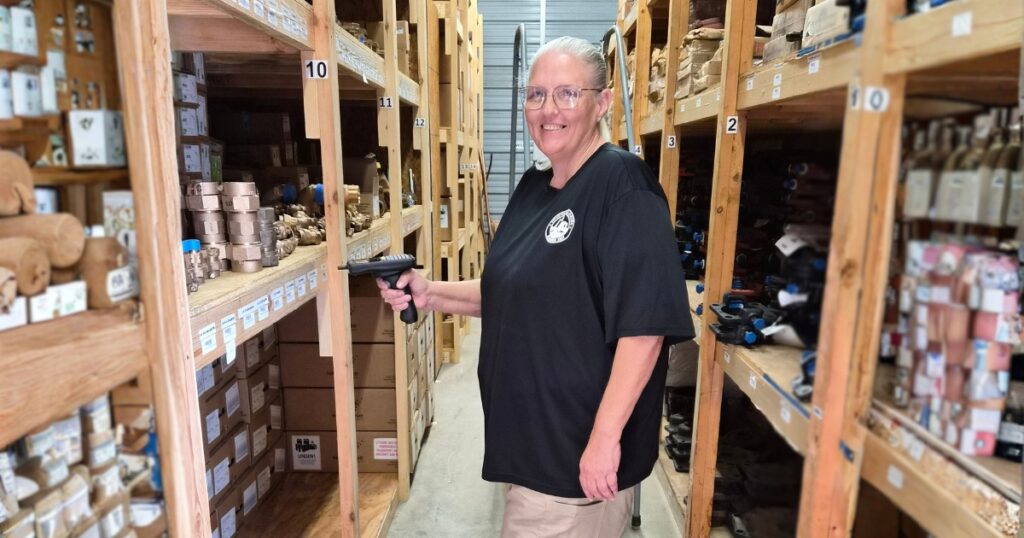
Vicki Perry has worked in the field for over 30 years, employed by City of Titusville’s Water Departments Field Operations as a Logistics Coordinator Tech. After encouragement from her son, a current student at EFSC, she decided to return to college herself.
“I realized that I would never rise in the field unless I had a degree,” said Perry, who is taking courses online.
In addition to teaching subjects like process improvement, data analysis, and supply chain management, the program prepares students to be future leaders by giving them a big-picture view of the logistics workplace environment and culture.
“One thing that has helped me tremendously is being able to look at a process and identify ways to make it more efficient and flow better,” said Perry. “It has also helped me strengthen my leadership and teamwork skills, since many assignments involve collaboration and real-world problem solving.”
Impacting the Space Coast – and Beyond
Graduates of the A.S. Transportation and Logistics program enter rewarding careers across the state of Florida, including with defense and aerospace companies, import/export operations at Port Canaveral, and large 3PL firms coordinating regional freight networks.
“Because Brevard County is home to Port Canaveral, Kennedy Space Center, major aerospace firms, and a growing network of manufacturing and distribution companies, the demand for skilled logistics professionals continues to rise,” said Dr. Looney.
Students can expect a career path with strong potential for advancement, paired with the flexibility to work locally, nationally, or even globally.
Dr. Looney reflected on the variety of student success stories that have come through the program.
“One graduate started in dispatch for a regional carrier and quickly advanced to operations coordination, managing logistics across several states. Another alum moved into international compliance, leading a team responsible for ensuring shipments meet complex regulatory standards.”
EFSC’s A.S. in Transportation & Logistics
The 2-year Transportation and Logistics program accepts applications on an ongoing basis, allowing students to begin classes at their convenience throughout the College’s terms.
Courses offered 100% online, with some technical electives and general education courses also available face-to-face, provide greater flexibility. An optional service-learning field study provides students with the opportunity to put theory into practice while earning college credit.
Graduates often enter the field in roles such as Inventory Control Specialists and Transportation Dispatchers before advancing to supervisory and coordinator positions. Obtaining additional certifications and gaining entry-level experience may eventually lead to annual salaries ranging from $70,000 to over $100,000 annually, depending upon the sector.
EFSC’s Transportation and Logistics program prepares students to play an essential role in ports, railways, trucking, and air cargo operations. With specialized instruction that readies students for industry certifications and licenses, opportunities for hands-on field experiences, and seamless integration into EFSC’s BAS in Organizational Management for further advancement, EFSC equips graduates with the training needed to thrive in the Space Coast’s dynamic transportation and logistics sector — and beyond.

- Former EFSC Athlete Makes Debut in Major League Baseball - September 28, 2026
- Producing Success: How EFSC Prepared Enrique J. Molinares for a Career in Media Production - July 1, 2026
- EFSC Student Finds Community and Achievement through Music - June 24, 2026