

Few experiences are as life-changing as college. You make new friends, form important connections with professionals, educate yourself in a particular field, and discover who you are. It may feel like a juggling act at times, but taking advantage of your college experience is worth the effort.
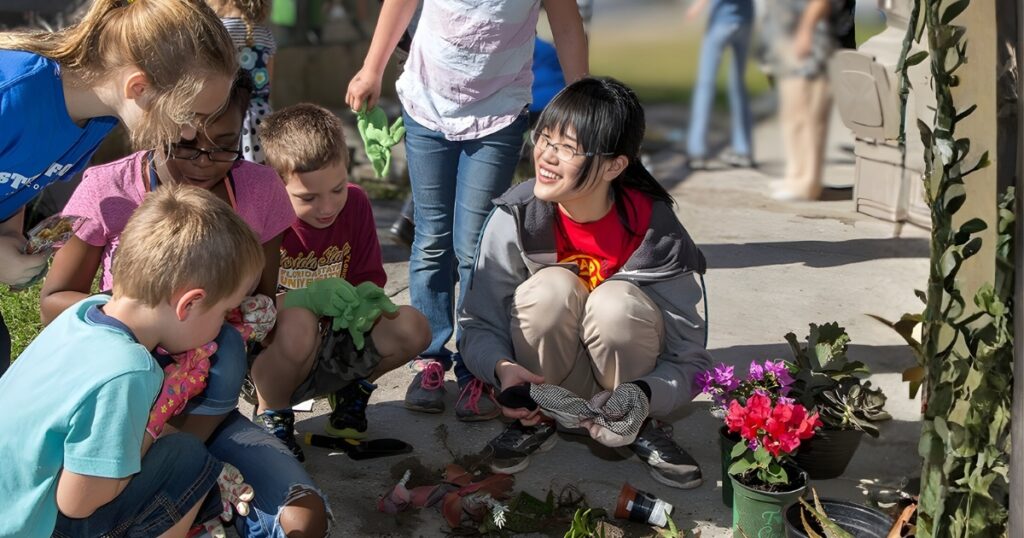
Service-Learning (or volunteering) in college can not only benefit your grades and well-being, but also your community and future. At EFSC, hundreds of students volunteer thousands of hours every year. Here are five ways Service-Learning can benefit you:
1. Field Experience
“What do you want to be when you grow up?” is a question we’ve all been asked. Even well into your college experience, you might not know the answer. Service-Learning can help you narrow down your interests through hands-on field experiences. After all, you may not know if you like working with animals at a clinic, teaching children, or marketing a nonprofit on social media until you’ve tried it for yourself.
2. Scholarships & Awards
Did you know EFSC has exclusive scholarships available for students who have completed a certain number of Service-Learning hours? By helping the community, you can also help pay for your education! Additionally, you may have the opportunity to be nominated for certain achievement awards, or even earn the rank of Citizen Scholar. Students who become Citizen Scholars receive a cord of distinction for graduation, a special listing in the graduation program, service hours listed on their academic transcript, recognition at an annual volunteer recognition event, a letter from the College President, and a Citizen Scholar certificate.
3. Job Opportunities
Service-Learning isn’t just an opportunity to discover whether a certain field is right for you—it’s also a chance for a potential employer to give you a “trial run” at their organization. Oftentimes, students get hired by their volunteer site, helping them get a foot in the door of their future dream job.
4. Personal Development
Service-Learning looks great on your résumé—and helps you develop into a more marketable, empowered individual. Contributing to your community, learning what you’re capable of, and making connections with diverse people all help improve your self-esteem. When you feel better about yourself, you’re more likely to excel in your studies, too!
5. Network Building
You may have heard the saying, “It’s all about who you know—and who knows you!” Having a strong network of people in different professions and skill sets is an effective way to find professional opportunities. Your Service-Learning site supervisor could serve as a reference for your first job application. Or perhaps a peer you volunteer with might know someone looking for a summer intern. The more you put yourself out there, the more opportunities you give the metaphorical butterfly effect a chance to flap its wings!
Ready to Try Service-Learning for Yourself?
Since its inception in 1988, more than 91,750 students have collectively served more than 3 million volunteer hours through the Center for Service-Learning and Civic Engagement. Its track record of pairing students with Service-Learning opportunities has made it one of the most respected programs in the United States, earning a place on the President’s Higher Education Community Service Honor Roll.
If you’re ready to try Service-Learning for yourself, check out EFSC’s Service-Learning webpage for a list of partner locations, how to sign up, how to earn college credit through volunteering, and much more.

- 5 Reasons to Volunteer While in College - February 4, 2026
- New Smiles Ahead: EFSC to Expand Dental Programs for Students & Community - January 14, 2026
- EFSC Composes Foundation for Student’s Music Education Career - November 19, 2025